


 News
News
~ 842 words | ~ 6 189 characters | Reading time: 4 minutes
What You Say About Others: The Hate Speech Effect and Positivity Bias.
If a politician wants to build an electorate, they often resort to hate speech. They hope to stir up emotions and attract supporters, aiming to appear competent and decisive in their eyes. However, the opposite can happen. Researchers from Adam Mickiewicz – Monika Obrębska, Barbara Konat, Nadia Demska and Marcelina Dobrowolska – showed that hateful content backfires, hitting the message senders and hitting them hard.
INTRODUCTION | In 2025, to say that hate and hate speech are widespread phenomena is an understatement. Annual reports from various organizations clearly show that hate speech has firmly established itself in public discourse, resounding on streets and in schools, and filling stadiums and social media alike..
Let’s look at this phenomenon from a completely different angle. Instead of viewing it from the perspective of the message sender or the receiver, let’s look at it through the eyes of a witness—a listener or a reader. We won’t dwell on the sender’s motivations or whether they are more right-wing or authoritarian. We won’t analyze the harm such a message causes, how much it lowers a sense of security or self-esteem. This time, let’s consider it from this third perspective. How and does a negative message change the sender’s image in the eyes of the listener?
Why might this be important? Politics is focused on well-known names. The current political climate highlights prominent individuals who operate in the foreground. Despite this, they’re far from being lone wolves. Their way of conducting discussions influences the entire party’s image.
“We are living in an era of candidate-centered politics” – Obrębska, Konat, Gajewska, Dembska i Dobrowolska (2025) write. – “This means that the electorate’s
attention shifts from political parties to specific candidates running for various political offices”
HIPOTHESES | The study was conducted to verify hypotheses about the influence of hate speech and kindness speech on the evaluation of the message sender.
Hipothesis 1: The evaluation of individual politicians’ images becomes more negative after they use hate speech.
When a politician insults others, it doesn’t positively affect their own image in the eyes of listeners. This phenomenon is explained by Forgas’s Affective Infusion Model (AIM). Think about how an unpleasant odor distorts your perception of your surroundings. Suddenly, everything seems ugly and messy, and you want to leave quickly. The AIM model works similarly, but in the world of emotions and words. When someone says or writes negative content, their audience experiences negative emotions (e.g., anger, disgust), which in turn affect how the recipient will view the message’s author. The brain won’t separate the words from the person, and the emotions stirred up will contaminate their image of the message sender.
Hipothesis 2: When a politician speaks kindly about others, their ratings rise in the eyes of the audience..
To put it simply, “how you speak about others is how others speak about you.” Psychologists have identified two psychological mechanisms that explain this phenomenon. One is spontaneous trait transference (STT). This can be explained as the principle of attributing the same traits to you that you see in others. When you say a coworker is easily offended, your conversation partner might think you are also prone to taking offense since you noticed it. This is a purely automatic process that works on associations. The second mechanism explaining the link between kind speech and rising approval among audiences is recursive transfer of attitudes (TAR). According to this model, our statements about others influence how we ourselves are perceived. When someone insults others, they seem arrogant and hostile. When people hear that a sender likes others, they themselves seem friendly and kind.
To make things more complex, a third hypothesis was also proposed to deepen the relationship between hate or kind speech and the evaluation of politicians. It is known that the evaluation of a statement doesn’t just depend on its content but also on who the recipient is. To paraphrase a well-known saying, beauty is in the ear of the beholder.
Hipothesis 3: The evaluation of a politician after the use of hate speech is a complex phenomenon, dependent on the views, age, and gender of the audience..
PARTICIPANTS |958 Polish participants (53.4% women; average age 46). Participants were evenly distributed among experimental and control conditions. Recruitment took place via the Ariadna research panel, an online platform where users fill out questionnaires in exchange for rewards.
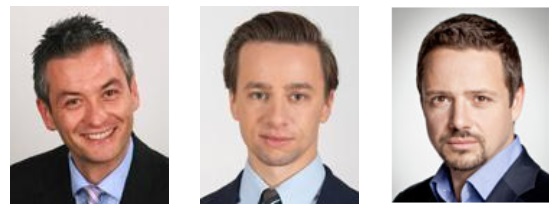
Politicians’ portraits, from left: Robert Biedroń, Krzysztof Bosak, Rafał Trzaskowski.
MATERIAL | Three well-known Polish politicians from different parties were selected, deemed by competent judges to be the most representative: Krzysztof Bosak (right-wing), Rafał Trzaskowski (center), and Robert Biedroń (left-wing). Tweets about refugees from Ukraine in Poland were used, chosen for their relevance and strong emotional charge that polarizes society.
THE PROCEDURE | The study consisted of two stages. First, participants were randomly assigned to one of the three politicians. They got acquainted with the person’s profile and made an initial evaluation using a psychometric tool called a semantic differential. It measures the perception of the study subject (the politician) in several ways, e.g., friendliness or hostility, competence or lack thereof, and honesty or dishonesty. After this phase, the researchers presented a short video. Its purpose was to distract the participants so they would forget about the politicians. After it ended, participants were again divided into one of three groups. The first group watched a positive tweet, the second a negative one, and the third a neutral one. After reading the tweet, participants re-evaluated the politician’s image on the same scale as before. At the end of the study, during a standard debriefing procedure, participants were informed that the tweets were generated by the researchers solely for the purpose of the study.
RESULTS | The study confirmed the researchers’ suspicions—hate speech backfires on the message sender. After reading negative tweets, politicians appeared more provincial, more dishonest, insincere, or aggressive, regardless of their political party affiliation. Furthermore, politicians’ ratings in the eyes of participants increased when they spoke kindly about Ukrainians.
And how were the individual politicians evaluated? After a positive tweet, women::
- perceived Krzysztof Bosak (right-wing) as more kind.
- rated Robert Biedroń as more qualified, attractive, sincere, trustworthy, and kind.
- rated Rafał Trzaskowski (center) as more cosmopolitan.
More results can be found in the original study (LINK BELOW).
The study shows that hate speech simply doesn’t pay for the speaker. Even a politician with whom we agree, and who can usually count on more positive evaluations, loses standing after publishing a negative tweet. The researchers discovered another interesting effect. Contrary to expectations, it was not the negative tweets that evoked the strongest emotions, but the positive ones. Where does this effect come from? The researchers explain it with the so-called positivity bias. In the sea of hatred that Polish politics seems to be, a good, warm message is like a gold treasure shining on the bottom. It stands out, grabs attention, and evokes stronger feelings.
“The ‘positivity bias’ obtained in our study may result from the dominance in public political debate in Poland of a negative and aggressive form of communication” – write the researchers (2025). – “Which means that positively marked political tweets featuring kindness speech are viewed as atypical, and thus more distinctive and noticeable”
TAKE HOME MESSAGE | It might seem that a party’s sympathizers would stand firmly behind their politician no matter what they say. As it turned out, in the face of hate speech, a politician’s ratings dropped in the eyes of both their opponents and their supporters. Messages with positive content attract much more attention.
In this post also used:
- The politicians’ photographs are from the website sejm.gov.pl. In the graphic, they are arranged alphabetically.
- In-text illustrations: Lili/Canva
- The illustration on the home page (i.e., the highlight image) was generated by artificial intelligence (Microsoft Copilot / DALLE).
Views: 10