


 News
News

- 23 February 2026
Did it taste good? So, is the worst truth always better than the best lie?
~ 843 words ~ 5 548 characters | Reading time: 4 minutes Did it taste good? So, is the worst truth always better than the best lie? If you know that someone is sensitive, is it worth telling the truth if it may hurt them? If you lie, how will others judge your behavior? Whom would you […]

- 16 December 2025
Open role: Chief Science Communicator
The Polish Social Psychological Society is looking for someone to present the research findings of PSPS members (and beyond) to a broader audience. Articles will be published on the PSPS website, Facebook, and X (formerly Twitter) of the Society. We want the voice of the Society to resonate not only through of icial letters and […]

- 25 November 2025
When Someone Else’s Pain Brings Satisfaction: An Experimental Study of Schadenfreude
~801 words | ~ 5 309 characters | Reading time: 4 minutes When Someone Else’s Pain Brings Satisfaction: An Experimental Study of Schadenfreude Can the pleasure derived from someone else’s suffering be measured? It turns out that it can. Karolina Dyduch-Hazar, a member of our association from the University of Würzburg, along with her colleagues, […]
- 1 September 2025
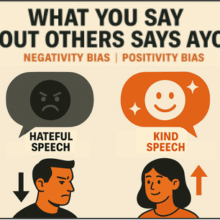
What You Say About Others: The Hate Speech Effect and Positivity Bias.
~ 842 words | ~ 6 189 characters | Reading time: 4 minutes What You Say About Others: The Hate Speech Effect and Positivity Bias. If a politician wants to build an electorate, they often resort to hate speech. They hope to stir up emotions and attract supporters, aiming to appear competent and decisive in […]

- 20 June 2025
Respect experiment: can tolerance be learned via norms?
~673 words | 4 098 characters | Reading time: 4 minutes The respect experiment: can tolerance be learned via norms? Tolerance is not always full acceptance – more often it means a willingness to live alongside those with whom we disagree. Psychologists distinguish between two types of tolerance – general and specific – and ask […]

- 20 June 2025
Is debriefing conducted by AI more effective?
~863 words | 5 420 characters | Reading time: 4 minutes Is debriefing conducted by AI more effective? Deception, or the deliberate misleading of participants, is used in psychological research. Although debriefing is conducted after the study, the effect of the prolonged impact of disinformation can ensure that false information continues to influence participants’ thinking. […]
Tears that bind and tears that divide – crying in a relationship
~772 words | 5 000 characters | Reading time: 4 minutes Tears that bind and tears that divide – crying in a relationship Although crying is a phenomenon known to all mankind, it is not known what role it plays in romantic relationships. Grant winner Adrianna Kaczuba-Kozic‘s research seeks to elucidate the relationship between types […]
- 6 March 2025
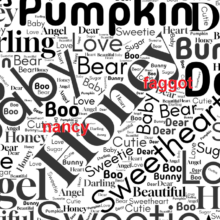
Reclaiming the word – does the offensiveness of an insult depend on context still causing shock?
~1 000 words | 7 661 characters | Reading time: 4 minutes Reclaiming the word – does the offensiveness of an insult depend on context still causing shock? The offensiveness of words can be changed – the best example being the word “queer” – through a process called reclaiming. It involves a conscious effort by […]
- 12 February 2025
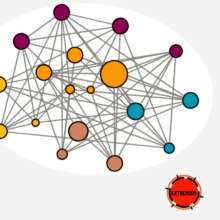
Will social cohesion solve the problem of violent extremism?
~1 137 words | 6 934 characters | Reading time: ~ 3 minutes Will social cohesion solve the problem of radical extremism? Social cohesion is assumed to be the cure for radical extremism. This assumption is made by the originators of projects to increase its level and the governments paying for these projects. But is […]

- 6 November 2024
Open call for PSPS Chief Science Communicator
The Polish Social Psychological Society is looking for someone to present the research findings of PSPS members (and beyond) to a broader audience. Articles will be published on the PSPS website, Facebook, and X (formerly Twitter) of the Scoiety. We want the voice of the Society to resonate not only through official letters and statements. […]